Review of a forensic trace examination report

Errors that occur in reports on traces, damage, vehicle traces and tool mark examination.

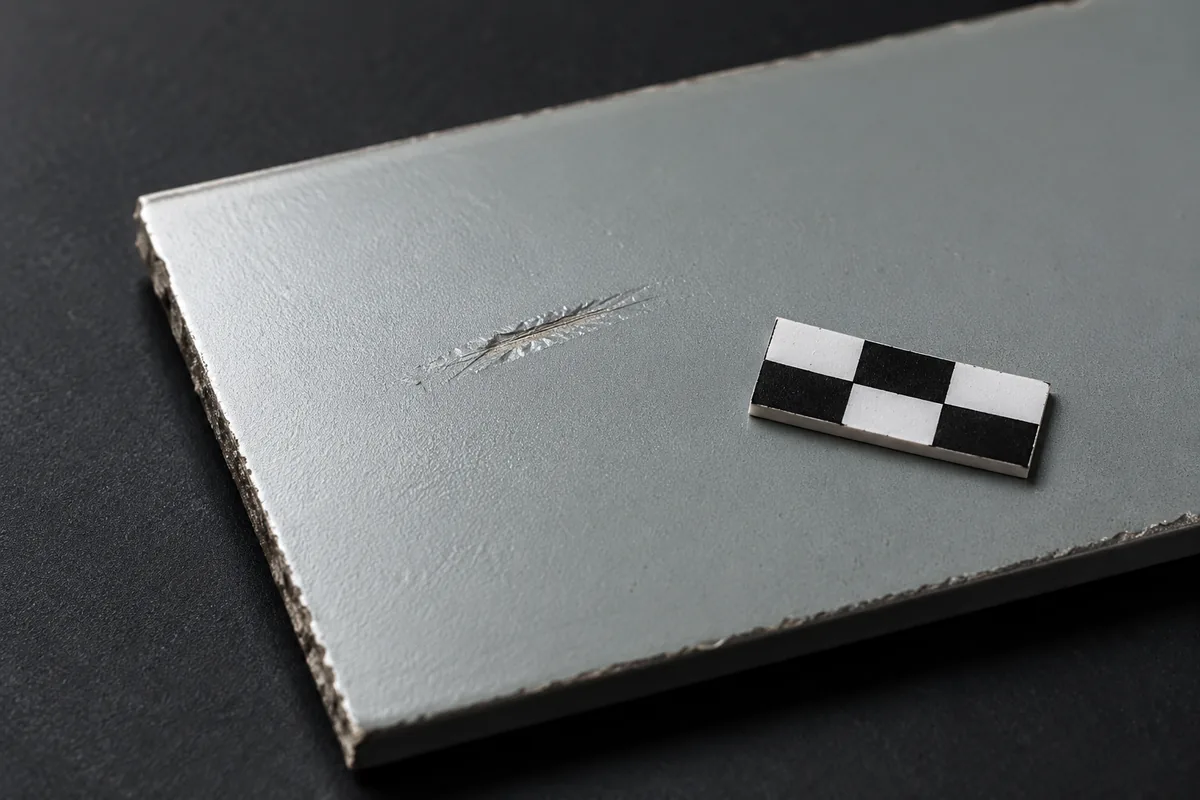
A mark on a painted surface and a scale reference
This illustration was created using AI and does not relate to a particular examination.

What a review checks

  • preservation and documentation of traces;
  • quality of photographs and scales;
  • sufficiency of comparison specimens;
  • completeness of feature descriptions;
  • substantiation of conclusions;
  • the presence of contradictions;
  • exceeding the limits of specialist knowledge.

Expanded on 21 October 2026

Check the preservation and suitability of the trace

The reviewer needs to know whether the object itself, a replica or photographs were examined. This difference affects access to surface relief and details. A scale in a photograph does not guarantee accuracy if its position and the geometry of the shot are unknown.

Distinguish levels of comparison

Agreement in overall dimensions and shape does not establish identity with a specific tool or object. The report must make clear which features substantiate the level of the answer and how differences were considered.

  • Is there a link between the overall view and the close-up?
  • Is the comparison object identified?
  • Were new marks introduced during an independent attempt at comparison?
  • Does the conclusion match the completeness of the submitted material?

A deficiency is noted together with its effect on the answer. A review must not turn a hypothesis about a different mechanism into an established event without performing the necessary examination of its own.

On this subject: A trace on a surface: why scaled close-ups and overall views should be photographed separately.

Inquiry

Send photographs of traces, documents or a description of the task

You may send photographs of traces, damage, locks, seals, footwear, tools or vehicles, a court ruling, an investigative order, draft questions or a report for review.

  • marks left by footwear, feet, clothing, teeth and fingernails;
  • marks left by implements, tools and mechanisms;
  • locks, seals, locking and sealing devices (ЗПУ);
  • vehicle traces and damage;
  • mechanical damage to clothing, knots and loops.

Up to 10 files of 10 MB each. Preserve the source photographs and information about the provenance of traces; physical objects are transferred separately.

How data is processed: Personal Data Processing Policy. Attach only materials relevant to the examination; redact unnecessary data about other people.

For physical objects, it is important to preserve traces, packaging, storage conditions and information about the provenance of specimens.

Attachments: up to 10 files of up to 10 MB each, with a maximum combined size of 15 MB. If a file is rejected, the enquiry is not sent.

Write to usDiscuss your task ↗